
Article by Annelie Stokke Grimwade
The NXT Magazine: Transformations of Care
Connection is an art, one that unfolds through introspection, is sustained by cultivation and practice, and requires dedication to survive. It needs care. And, dare I say, it needs caring artists, too?
At a moment pivotal to the future co-existence of life on Earth, artists are increasingly called to work sustainably. As a queer artist of Swedish Sámi descent, whose practice relies heavily on precious raw minerals and energy intensive processes, I feel the weight of this responsibility. Particularly because sustainability measures often focus on materials rather than the spiritual or relational aspects of creation.

Photo: Dorthe Krogh
Kae Tempest writes in their book On Connection (2022) how art allows us to remember that we are not alone in our struggles; it binds us in shared experience. And that creative connection is the use of care to cultivate relation, allowing yourself and others to move into a more engaged space.
I believe that creativity and storytelling are part of what makes us human. They are also how we carry knowledge forward, not just from one generation to the next, but from one state of being to another. As such, art is not merely a reflection of the world, but a method. Not just a record, but a proposition for becoming, that springs from a disposition of love. In this sense artists are not only storytellers, but story makers.
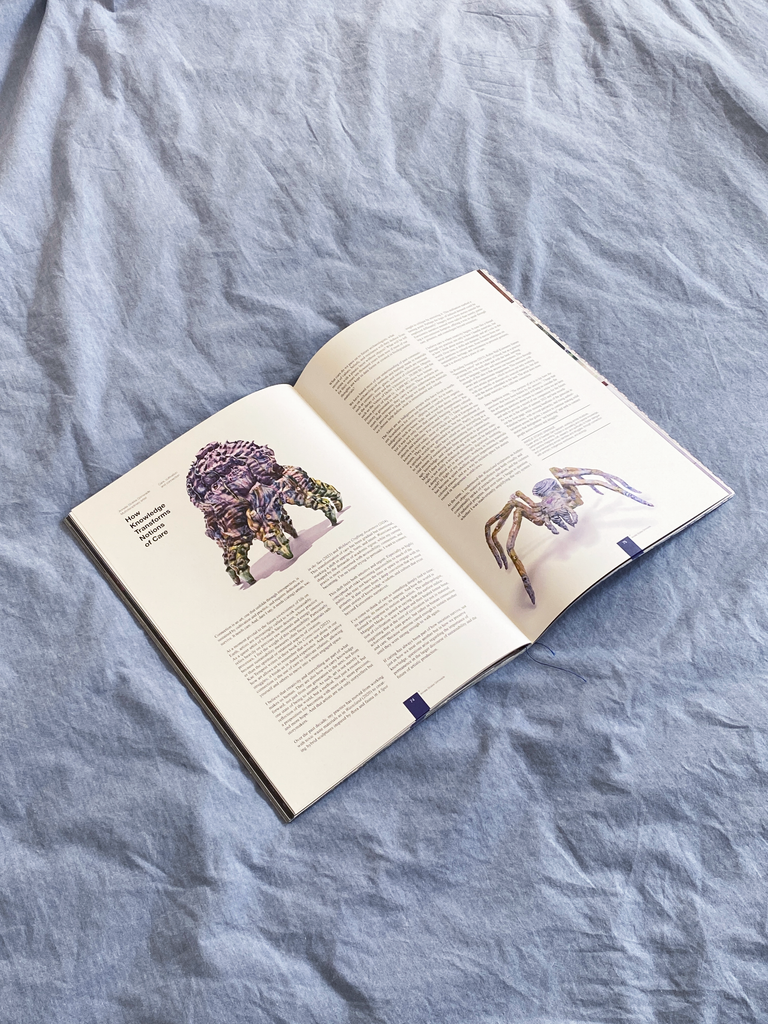
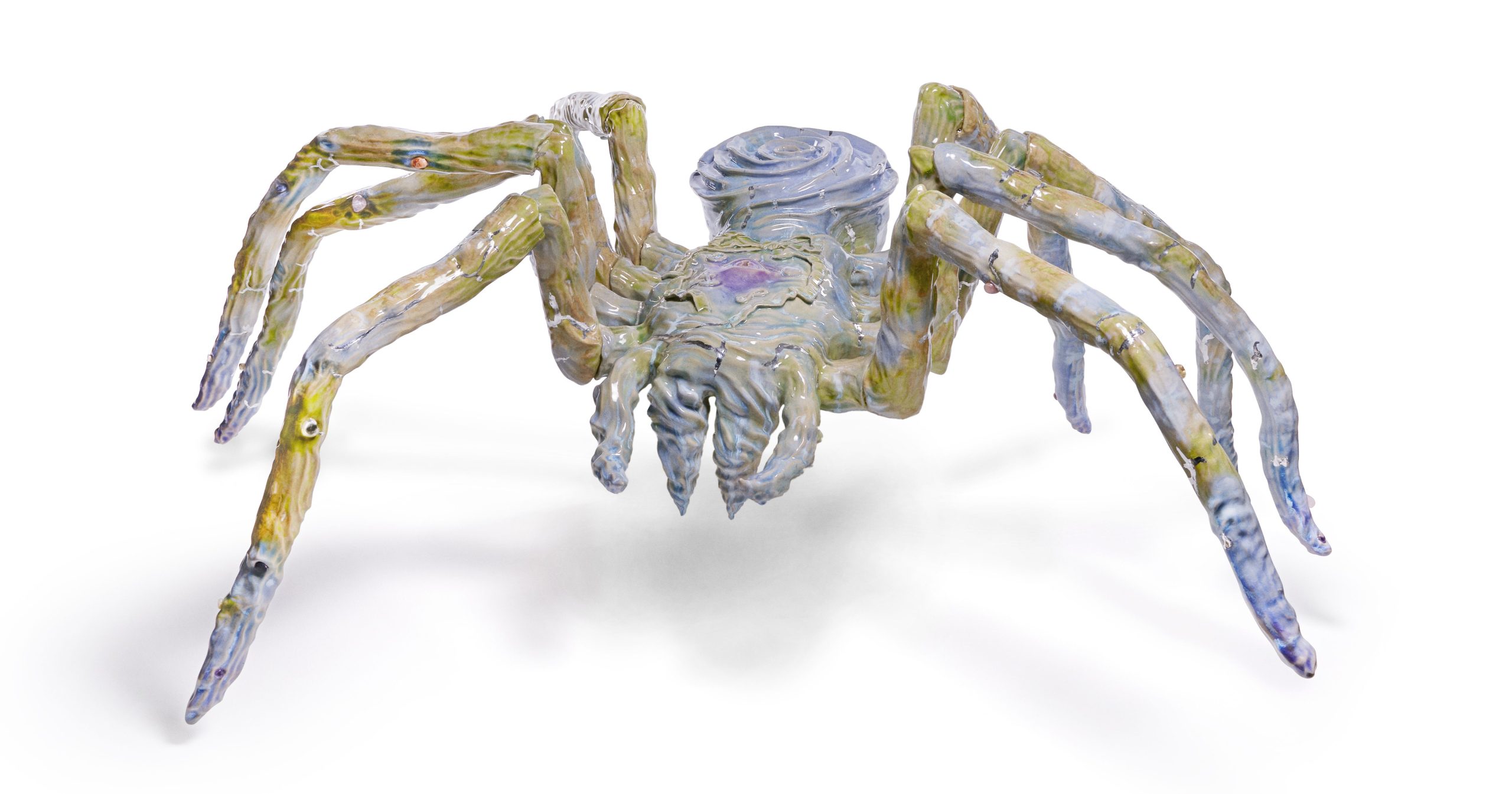
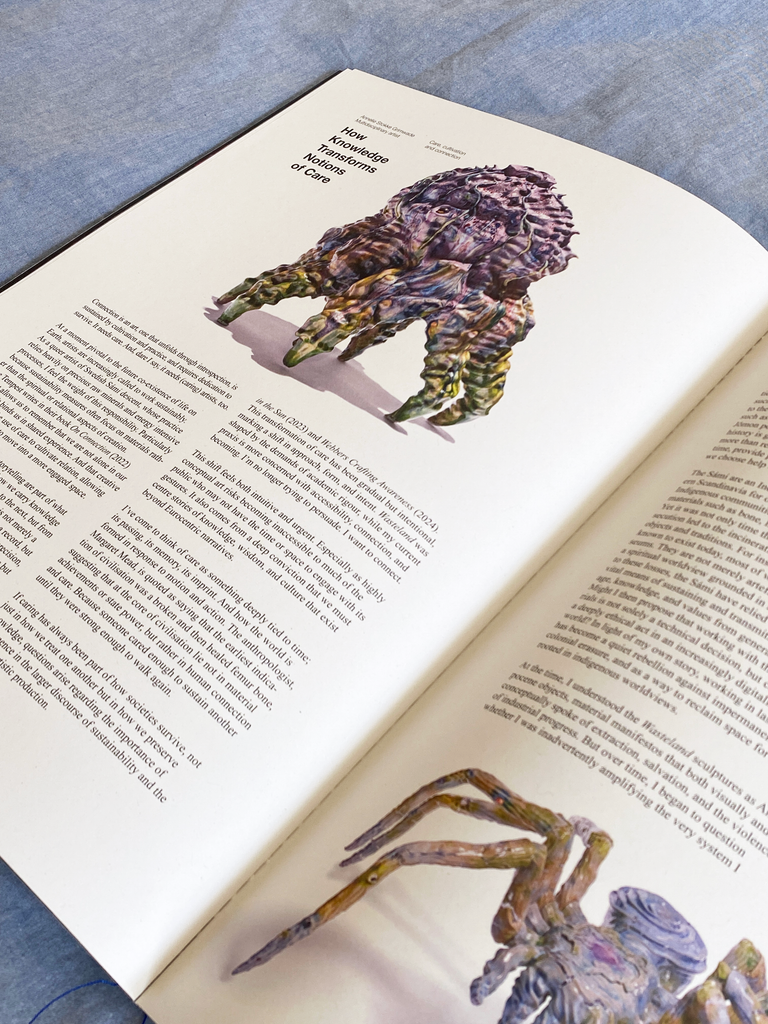
Over the past decade, my practice has moved from working with toxic waste materials as in Wasteland (2020) to creating hybrid sculptures inspired by flora and fauna in A Spot in the Sun (2023) and Webbers Crafting Awareness (2024). This transformation of care has been gradual but intentional, marking a shift in approach, form, and intent. Wasteland was shaped by the demands of academic rigour, while my current praxis is more concerned with accessibility, connection, and becoming. I’m no longer trying to persuade. I want to connect.
This shift feels both intuitive and urgent. Especially as highly conceptual art risks becoming inaccessible to much of the public who may not have the time or space to engage with its gestures. It also comes from a deep conviction that we must centre stories of knowledge, wisdom, and culture that exist beyond Eurocentric narratives.

I’ve come to think of care as something deeply tied to time; its passing, its memory, its imprint. And how the world is formed in response to motion and action. The anthropologist, Margaret Mead, is quoted as saying that the earliest indication of civilisation was a broken and then healed femur bone, suggesting that at the core of civilisation lie not material achievements or state power, but rather in human connection and care. Because someone cared enough to sustain another until they were strong enough to walk again.
If caring has always been part of how societies survive, not just in how we treat one another but in how we preserve knowledge, questions arise regarding the importance of permanence in the larger discourse of sustainability and the future of artistic production.
What cues do we pass on to future archaeologists, what record of values, beliefs, and resistance will they deduce from a strata with a plastic layer without precious objects? What will be left for their senses ten thousand years from now if most of our thoughts are kept in data farms or created in biodegradable materials?
We have based most of our understanding of past communities on archaeological methods and findings made in materials such as ceramic, stone, glass, and metals, which are resistant to the decay of time and the violence of colonialism. Objects such as the Venus of Dolní Věstonice (c. 29,000 BC) and the Jōmon pottery of Japan (c. 14,000 BC) show how human history is grounded in such craft objects. These artefacts are more than remnants; they carry a tactile understanding across time, provide proof that the things we shape and the materials we choose help define what is remembered and valued.
The Sámi are an Indigenous people who have lived in northern Scandinavia for over ten thousand years. As in many Indigenous cultures, objects were often crafted from organic materials such as bone, hide, and wood that decay over time. Yet it was not only time that caused their disappearance. Persecution led to the incineration and banning of many cultural objects and traditions. For instance, only 71 Sámi drums are known to exist today, most of which are held in European museums. They are not merely artefacts, but the embodiment of a spiritual worldview grounded in animism. Partly in response to these losses, the Sámi have relied on oral storytelling as a vital means of sustaining and transmitting their cultural heritage, knowledge, and values from generation to generation.
Might I then propose that working with these precious materials is not solely a technical decision, but can be deployed as a deeply ethical act in an increasingly digitalised, numbing, world? In light of my own story, working in lasting materials has become a quiet rebellion against impermanence, against colonial erasure, and as a way to reclaim space for stories rooted in indigenous worldviews.
At the time, I understood the Wasteland sculptures as Anthropocene objects, material manifestos that both visually and conceptually spoke of extraction, salvation, and the violence of industrial progress. But over time, I began to question whether I was inadvertently amplifying the very system I sought to critique by mirroring it. This realisation marked a turning point in my world view. Perhaps the logic of induced demand could be employed differently? Centrering imagery and stories outside the Eurocentric narrative seemed more radical than merely pursuing a zero-emission footprint alone. Offering a way to speak through cosmologies of care beyond extraction.
I believe care is where creativity begins. It runs like a thread through my practice; not only in how I handle materials, but in how I think about stories, relationships, and art’s role in the world. Over time, it shifts and deepens. It moves from material questions to cultural ones, from broader reflections on sustainability, heritage, and coexistence to personal gestures, but it is always from a place of care.
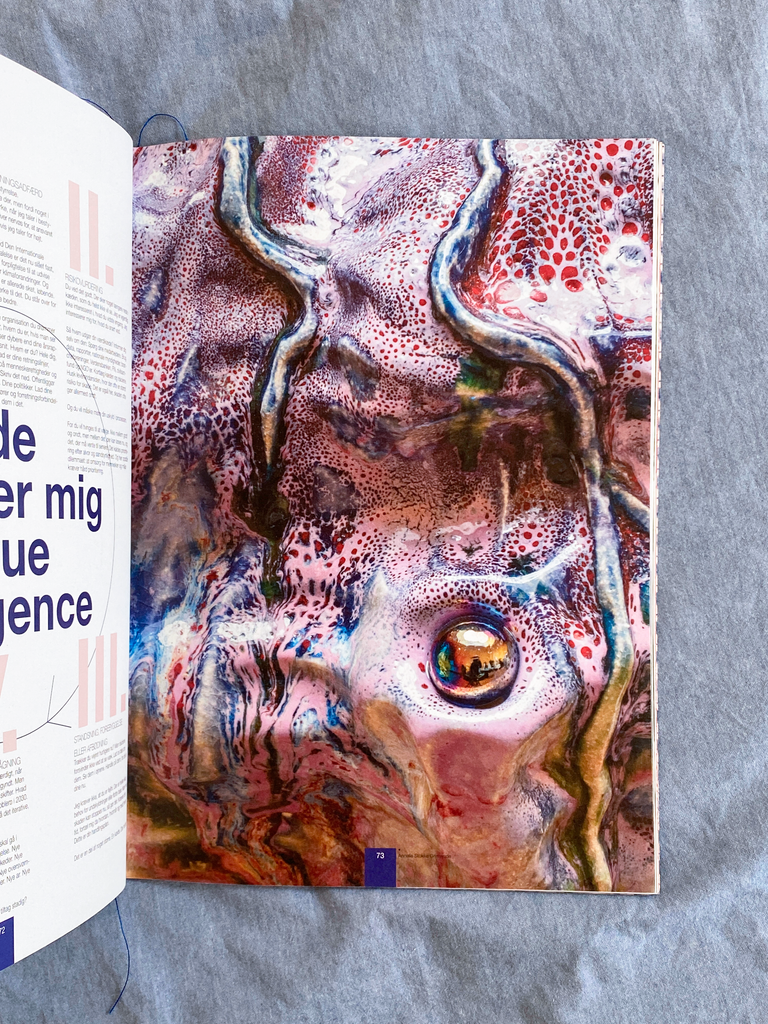
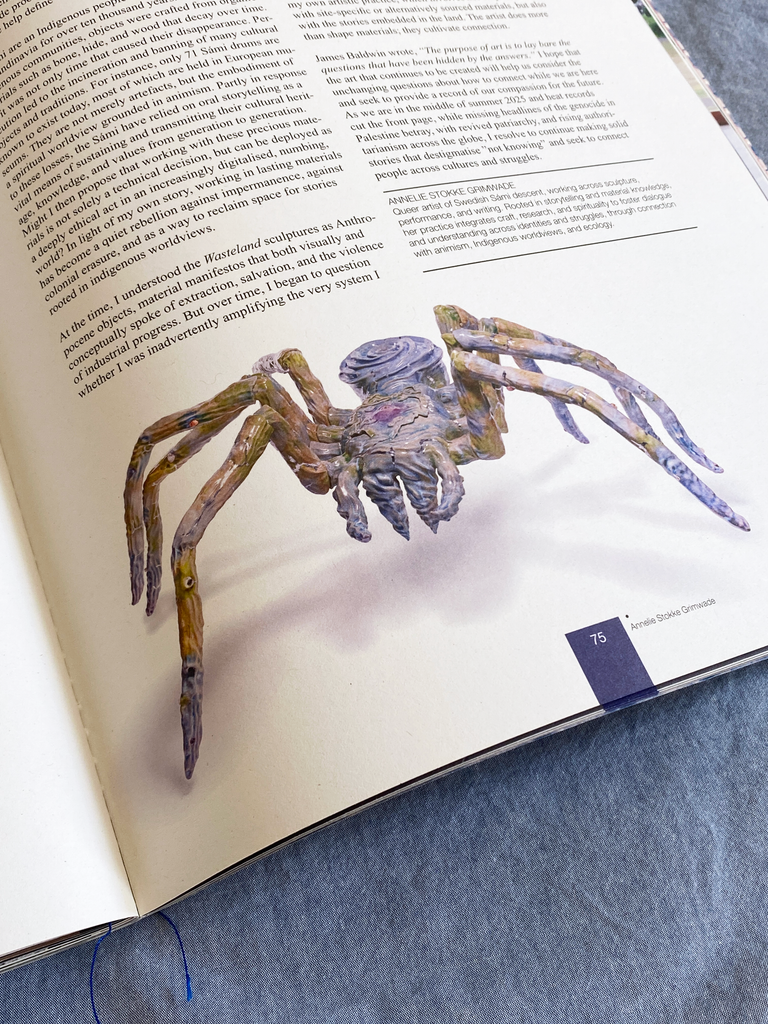
In Braiding Sweetgrass (2013), Robin Wall Kimmerer frames “becoming native” not as a matter of blood, but as a practice of reciprocity with each other and with the land, learning from its language, history, and interconnectedness. The strength of this idea is that anyone can become native through aware and compassionate engagement. This resonates with my own artistic practice, which involves not only working with site-specific or alternatively sourced materials, but also with the stories embedded in the land. The caring artist does more than shape materials; they cultivate connection.
James Baldwin wrote, “The purpose of art is to lay bare the questions that have been hidden by the answers”. I hope that the art that continues to be created will help us consider the unchanging questions about how to connect while we are here and seek to provide a record of our compassion for the future. As we are in the middle of summer 2025 and heat records cut the front page, while missing headlines of the genocide in Palestine betray, with revived patriarchy, and rising authoritarianism across the globe, I resolve to continue making solid stories that destigmatise ”not knowing” and seek to connect people across cultures and struggles.
ANNELIE STOKKE GRIMWADE
Queer artist of Swedish Sámi descent, working across sculpture, performance, and writing. Rooted in storytelling and material knowledge, her practice integrates craft, research, and spirituality to foster dialogue and understanding across identities and struggles, through connection with animism, Indigenous worldviews, and ecology.


The magazine was published with the support of Statens Kunstfond.
Available at Kunsthal Charlottenborg, CAFx, Politikens Boghandel, Borups Højskole and BLADR, or via sales@nybrogadepress.com